


Royal Icing Recipe: My Go-To Royal Icing Recipe (Simple, Stable, and Perfect for Decorated Sugar Cookies)
- Rachel Noel

- Mar 18
- 7 min read
Updated: Jun 30
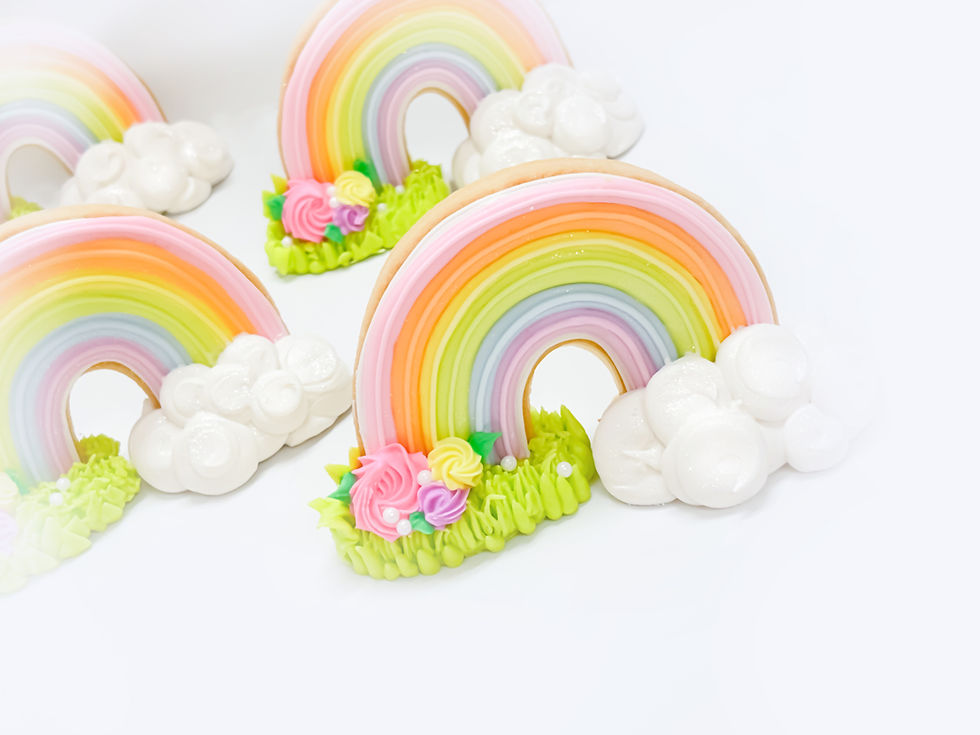
The Royal Icing Recipe I’ve Used for Over 15 Years
If you've ever taken one of my cookie classes, this is the exact royal icing recipe you’ve probably worked with. After more than 15 years of teaching sugar cookie decorating, I have tested countless royal icing recipes. Some were too soft, some dried too brittle, some were overly complicated, and some were just too expensive for consistent use.
I kept coming back to this one.
This recipe is simple, reliable, affordable, and most importantly — it works. It comes together quickly, creates a very stable base icing, and can easily be adjusted for any decorating technique. Whether you're outlining, flooding, or adding fine details, this recipe gives you a strong starting point.
I have personally been working with this recipe for as long as I can remember, both in my own decorating and while teaching hundreds of students over the years.
Why I Like This Recipe
There are three big reasons I continue to use this recipe in my classes and personal decorating:
It’s simple – No complicated steps or specialty ingredients.
It’s stable – This icing holds detail well and dries with a smooth finish when mixed properly.
It’s versatile – This recipe is basically a blank canvas.
You can customize the flavor using different extracts or emulsions without changing the structure of the icing.
It also comes together very quickly and is relatively inexpensive compared to some other royal icing recipes, which makes it great for both beginners and professionals.
A Note About Sugar Cookie Decorating
Decorated sugar cookies are one of the most underestimated skills in the baking world. People often assume they are easy because the ingredients are simple, but in reality they require patience, consistency control, and practice.
This is why I always tell my students:
Progress matters more than perfection.
The more you practice, the more comfortable you become with icing consistency, piping pressure, and timing. What feels difficult at first eventually becomes second nature.
If you don’t already have a good sugar cookie base, you can also check out my sugar cookie recipe here which pairs perfectly with this icing.
Flavoring Your Royal Icing
One of my favorite things about this recipe is how customizable it is. Vanilla is the standard because it gives a classic bakery flavor, but you can easily change the profile using:
Almond extract
Butter emulsion
Lemon extract
Cake batter flavoring
Other clear emulsions
I do recommend sticking with clear or white flavorings when possible so your icing stays bright white and your colors stay true.
Good quality vanilla makes a noticeable difference in flavor. If you use a darker vanilla extract, you may want to slightly reduce the amount to prevent discoloring your icing. Clear vanilla is often preferred for this reason. There are also real clear Mexican vanillas available online. (You can reference your Amazon storefront here.)
How to Color and Thin Royal Icing
Once your base icing is made, the next step is coloring and adjusting consistency. This is where royal icing really becomes customizable.
The three main brands I personally use are:
Chefmaster (gel colors) – Very beginner friendly and easy to control.
AmeriColor (gel colors) – Another excellent professional brand that produces consistent, vibrant colors.
The Sugar Art (powdered pigments) – These may feel intimidating at first, but they produce some of the richest colors available. Their reds and blacks especially are fantastic. Because these are dry pigments, they allow you to achieve deep colors without adding extra moisture to your icing.
This is extremely helpful when you need very stiff red or black icing that still holds structure.
The Correct Order Matters
When preparing colored icing, always follow this order:
1. Portion your base icingOnly work with the amount you currently need.
2. Add your color firstGel colors add moisture, so this adjustment should happen before adding water.
3. Then add water slowlyAdd very small amounts of water until you reach the consistency you need.
The more water you add, the thinner your icing becomes.
Why There Is No Exact Water Measurement
One of the most common questions I get is:
"How much water do I add?"
Unfortunately, there is no exact answer.
Royal icing consistency depends on many variables including:
The brand of food coloring used
Humidity levels
Small measuring differences
Mixing time
How long the icing has rested
Because of this, thinning icing comes down to experience and observation rather than exact measurements.
This is why I always tell my students:
Royal icing is learned through feel, not just recipes.
Add water slowly, test consistency, and adjust as needed. With practice, you will start recognizing proper consistencies very quickly.
If you accidentally thin your icing too much, simply add a small amount of your stiff base icing back in to correct it.
Important Mixing Tips
Many decorating problems actually come from technique rather than ingredients. Overmixing is one of the biggest mistakes beginners make.
Overmixing incorporates too much air into the icing which can cause:
Air bubbles surfacing while drying
Cratering
Cracking
Rough finishes
False thick consistency from trapped air
As the icing sits, those air bubbles deflate and the icing can suddenly become much thinner than expected, which causes issues with outlining and flooding control.
Let Your Colors Mature
It is always best to mix dark colors like reds, blacks, and deep blues ahead of time and allow them to rest for a few hours at minimum, preferably 24 hours.
This allows the color to fully develop without needing excessive food coloring.
Keep in mind:Colors naturally darken as they sit, especially when larger amounts of gel color are used. Planning ahead helps you achieve deeper colors while keeping your icing stable.
The Secret to Good Royal Icing Isn’t Just the Recipe
Many decorating issues come from small habits rather than the recipe itself. Some simple improvements include:
Do not overmix
Color before thinning
Add water slowly
Let dark colors rest
Practice consistency control
Small adjustments like these can dramatically improve your results.
Final Thoughts
If you're just starting your cookie decorating journey, remember that nobody starts off great at royal icing. Every decorator you see has dealt with cracking icing, air bubbles, and colors that didn’t cooperate.
The difference is they kept practicing.
Start with a dependable recipe, learn how your icing behaves, and most importantly — enjoy the process.
Perfect cookies come from practice… not perfection.
Download to print:
Cookie Icing (Royal Icing)
Royal icing is the foundation of beautifully decorated sugar cookies. This recipe creates a bright white, smooth, and sturdy icing that's perfect for outlining, flooding, lettering, and intricate detail work. It mixes quickly, colors beautifully, and provides a reliable base that can easily be adjusted to the consistency needed for any decorating technique.
Whether you're decorating a dozen cookies or preparing icing for a large class, this recipe is one I rely on every time.
Author: Rachel NoelIt's Just a Cookie Sugar Art Studio
Ingredients
Powdered (confectioners') sugar — 8 cups (approximately 907 g | 32 oz)
Meringue powder — ⅓ cup (approximately 57 g | 2 oz)
Warm water — ½ cup (113 g | 4 oz)
Clear vanilla extract or vanilla emulsion — 2 teaspoons (10 mL)
Light corn syrup — 1 tablespoon (21 g | 0.75 oz)
Instructions
Step 1 – Activate the Meringue Powder
In the bowl of a stand mixer, combine:
Warm water
Meringue powder
Clear vanilla extract or vanilla emulsion
Whisk until the mixture becomes light, foamy, and frothy.
Rachel's Tip: Properly hydrating the meringue powder before adding the sugar helps create a smoother royal icing with fewer lumps.
Step 2 – Add the Remaining Ingredients
Add:
Powdered sugar
Light corn syrup
Attach the flat paddle attachment to your stand mixer.
Step 3 – Mix the Royal Icing
Mix on medium to medium-high speed for approximately 3 minutes, or until the icing becomes:
Bright white
Light and fluffy
Very stiff
Rachel's Tip: Do not overmix your royal icing. Mixing too long incorporates excess air into the icing, which can create unwanted air bubbles and may cause separation while decorating.
Step 4 – Color the Icing
This recipe produces a very stiff consistency royal icing. Think of it as your master batch or base icing.
Before adjusting the consistency, portion out only the amount you'll need for each color.
Add your gel food coloring and mix until the color is fully incorporated.
Rachel's Tip: Gel food coloring adds moisture to the icing, so always color your icing before adding additional water.
Step 5 – Adjust the Consistency
Once your icing is colored, slowly add small amounts of water until you reach the consistency needed for your project.
Different decorating techniques require different consistencies, including:
Outlining
Flooding
Detail work
Lettering
Flowers
Piping borders
Rachel's Tip: Add water only a few drops at a time. It's much easier to thin royal icing than it is to thicken it again.
Baker's Tips
Always use the paddle attachment instead of the whisk attachment to reduce air bubbles.
Mix only until the icing reaches a bright white, stiff consistency.
Color your icing before adjusting the consistency.
Keep royal icing covered whenever it's not in use to prevent crusting.
Store finished icing in airtight containers with plastic wrap touching the surface.
Storage
Store royal icing in an airtight container in the refrigerator for up to 3 days.
If you won't be using it within that time, freeze it in an airtight container for up to 6 months. When you're ready to use it, thaw it overnight in the refrigerator before bringing it to room temperature.
Prepared icing bags can generally remain at room temperature for 3–5 days, provided they're sealed well. While bacteria typically won't grow in royal icing made with meringue powder, exposure to air will cause the icing to dry out, making it difficult—or impossible—to decorate with.
Over the first few days, it's completely normal for the liquid and solids to begin separating. If this happens, simply massage the icing bag with your hands until the icing becomes smooth and uniform again.
Rachel's Tip: Always test your icing before decorating your cookies. Properly mixed royal icing should appear smooth, opaque, and resemble acrylic craft paint. If the icing looks transparent, watery, or marbled, continue kneading or mixing the icing in the bag until it returns to a smooth, consistent texture before piping.
Don't forget to download the printable PDF version of this recipe to keep in your recipe binder. Happy decorating!

Comments